sigmet ha scritto: 4 novembre 2026, 22:01
Ci sono delle condizioni ad alta quota e a temperature inferiori ai -20° che favoriscono l’accumulo di cristalli di ghiaccio sulle superfici (e non solo) che a differenza del ghiaccio opaco (rim ice) non e’ sempre visibile. Anche l’uso del radar meteo in una situazione del genere potrebbe essere inutile non riuscendo questo a discriminare la reale quantità di acqua a causa della scarsa riflessione di questi cristalli. L’accumulo di ghiaccio sui piani di coda e’ in genere superiore a quello sulle ali ed e’ per questo motivo che viene utilizzato il tail antiice /deice in forma preventiva. C’e’ inoltre da considerare che generalmente sui business jet questo equipaggiamento e’ elettrico poiche’ la quantità di aria calda spillata dai motori e’ relativamente minore rispetto alla capacità di un liner. Inotre l’impennaggio a T e’ piu’ vulnerabile al ghiaccio rispetto a quello tradizionale.
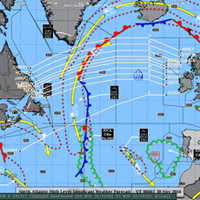
Un ultima considerazione : l’energia dell’atmosfera a causa del riscaldamento globale e’ aumentata. Pochi giorni fa ho evitato un CB sulla costa occidentale dell’Inghilterra che arrivava a piu’ di 39.000ft, altezza impensabile fino a qualche anno fa alle nostre latitudini e che era tipica invece solo dei fronti intertropicali (c’e’ chi ancora nega il cambiamento climatico..)

le tue parole si sposano bene con quelle di questo pilota collaudatore
I have been requested multiple times to give my 2cents at this point only my insight without CVR data but an educated guess
I’ve continued reviewing the November 1 Learjet 60 accident, N722BD, including the ATC recordings, ADS-B track, weather radar imagery, and the latest NTSB statements.
My working theory is becoming more focused on a weather-induced aerodynamic upset, potentially involving an ice-contaminated horizontal tailplane, followed by an extreme descent, overspeed, and possible secondary structural failure during the attempted recovery.
Weather encounter and possible initiating event
One of the more significant pieces of information is the radar imagery depicting the aircraft’s flight path intersecting an area of intense precipitation associated with rapidly developing convective activity.
At approximately FL350, the crew reported icing, moderate turbulence, and precipitation. They subsequently requested a climb to FL370.
The reported outside temperature was approximately −46°C to −47°C.
My concern is that the aircraft penetrated an area of intense convective precipitation containing substantial frozen or potentially supercooled hydrometeors. Depending on the actual liquid-water content, ice-crystal concentration, and effectiveness of the aircraft’s ice-protection systems, this encounter could have produced an aerodynamic disturbance or ice contamination affecting critical surfaces.
At those temperatures, I recognize that conventional supercooled-droplet icing cannot simply be assumed. The precipitation phase and actual ice accretion would need to be established.
My primary theory: Horizontal tailplane stall
I suspect an icing-related loss of horizontal-tail aerodynamic effectiveness may have initiated a severe nose-down pitch departure.
The horizontal stabilizer normally develops downward aerodynamic force under many flight conditions. Ice contamination can alter its pressure distribution, reduce its aerodynamic margin, and potentially produce a tailplane stall or other loss of pitch-control effectiveness.
If that occurred, the resulting pitch-down could have been abrupt and difficult to recognize or arrest.
As you know, recovery from an ice-contaminated tailplane stall can be counterintuitive compared with conventional wing-stall recovery, and appropriate actions depend on the aircraft configuration and approved procedures.
There is an important distinction here: the traditional ice-contaminated tailplane stall is frequently associated with flap deployment, and we do not know the Learjet’s flap configuration or whether this mechanism applies to the initial upset.
Nevertheless, I believe the horizontal stabilizer, elevator, and associated ice-protection system deserve particular attention.
Extreme descent and overspeed
The recorded flight path appears to show an abrupt departure into a steep descending turn, with descent rates exceeding 30,000 FPM in some tracking analyses.
The crew reported an overspeed condition and substantial bank angle.
The final impact footage appears consistent with an almost vertical descent.
My interpretation is that the aircraft may have suffered an initial aerodynamic upset and then accelerated rapidly as the crew attempted to regain control.
During such an event, significant pitch, roll, and yaw excursions, combined with elevated dynamic pressure, could produce substantial and potentially asymmetric loading on the stabilizer, elevator, and supporting structure.
Secondary structural failure
This is where my theory becomes particularly concerning.
I suspect the horizontal tailplane may have suffered structural damage or failure during the attempted recovery, possibly after the initial icing-related upset and subsequent overspeed.
The extreme descent profile, reported overspeed, and potential multi-axis aerodynamic loading provide a plausible mechanism for excessive structural loads.
Importantly, the NTSB has now acknowledged evidence suggesting some degree of aircraft breakup prior to impact.
That does not establish a horizontal stabilizer failure, but it makes the sequence and location of any component separation critical investigative questions.
I would particularly want to know whether the horizontal stabilizer or elevator separated before ground impact and, if so, whether that separation preceded the loss of control or occurred later during the descent and recovery attempt.
My proposed accident sequence
Convective precipitation encounter at FL350 → possible ice contamination or other tailplane aerodynamic disturbance → abrupt pitch-down and loss of control → steep, accelerating descent → overspeed and substantial multi-axis loading → possible horizontal stabilizer/elevator structural failure during recovery → unrecoverable near-vertical descent and ground impact.
I also recognize that a severe convective upset, autopilot or trim malfunction, air-data disturbance, or a primary structural failure could produce aspects of this same flight profile.
Areas I would want investigated
* Radar reconstruction, storm vertical development, and actual precipitation phase at the aircraft’s altitude.
* Horizontal stabilizer anti-ice operation, serviceability, and maintenance history, particularly in light of FAA AD 99-16-03.
* Elevator, trim, autopilot, and flight-control system integrity.
* Aircraft configuration, indicated airspeed, Mach number, and recorded pitch/roll attitudes.
* Location, fracture characteristics, and sequence of any in-flight structural separation.
* Whether the available evidence supports an initial aerodynamic upset followed by a secondary structural failure, rather than structural failure as the initiating event.
My position remains that an icing-related tailplane aerodynamic upset followed by overspeed and possible horizontal-tail structural failure is a credible working hypothesis, but not yet an established or necessarily the most probable accident sequence.
I’d be interested in your assessment from an investigation and structural-load perspective, particularly whether the available descent profile and apparent in-flight breakup are consistent with a secondary failure of the horizontal stabilizer during recovery.
The young copilot’s composure and continued communication with ATC throughout this event were extraordinary. Whatever ultimately initiated this accident, she demonstrated remarkable professionalism under extreme circumstances.
Godspeed to all nine souls aboard.
“Nathalia Gadelha Filgueiras — A Steely-Eyed Aviator. Godspeed.”
B.P. Gluck
Dark Horse Experimental Flight Test
ATP
LearJet 45 typed
Poi continua
A recurring question: Why didn’t the Learjet crew simply fly around the thunderstorms?
This is probably the most common question I’m receiving, and it’s a legitimate one.
As a professional pilot and experimental test pilot, I can tell you that thunderstorm avoidance is fundamental to safe flight operations. The FAA recommends remaining at least 20 miles away from severe thunderstorms, and I frequently give them considerably more room.
Modern business jets have onboard weather radar, but that radar has limitations. It primarily detects precipitation, not turbulence, and heavy precipitation can mask dangerous weather behind it. Flying between two storm cells doesn’t necessarily mean you’re in safe air.
ATC can provide weather information and approve deviations, but the pilot in command remains responsible for avoiding hazardous weather.
What I want to know is what the crew actually saw on their radar, what weather information they had available, what clearances were issued, and what decisions were made before the loss of control.
We cannot determine from flight tracking alone what the pilots were seeing or experiencing in the cockpit.
My working theory concerns what may have happened aerodynamically after the aircraft encountered trouble. Determining why it was in that position in the first place is an equally important part of the investigation.
There are two separate questions here: What initiated the loss of control, and could the circumstances leading up to it have been avoided?
Both deserve answers. That’s how we learn from accidents and prevent future tragedies.